
Your Body Isn’t Broken
The fascinating science behind your hormones, nervous system and why Somalates® matters in midlife
There is a lot of talk about the nervous system right now.
“Regulate your nervous system.”
“Stimulate your vagus nerve.”
“Activate your parasympathetic system.”
And there is some fascinating physiology behind all of this.
But the human body is much more clever — and much more connected — than a single nerve that we can simply “switch on”.
Your hormones, brain, nervous system, body clock, temperature regulation, sleep, nutrition and movement are constantly talking to one another.
And during perimenopause and menopause, that conversation can change.
This is one of the reasons I created Somalates®.
Not as another nervous-system “hack”.
But as a way of helping women reconnect with the body and its signals.
Let's start with the vagus nerve
The vagus nerve is one of the major communication pathways of the parasympathetic nervous system.
It carries information between the brain and organs including the heart, lungs and digestive system.
But the vagus nerve isn't the message itself.
It's more like the communication route.
One of the important chemical messengers used by the parasympathetic nervous system is acetylcholine (ACh).
Acetylcholine helps nerves communicate with organs and muscles and also plays important roles in the brain, including attention, learning and memory.
So the simple version is:
Nerve signal → acetylcholine → receptor → response
And producing acetylcholine requires the right raw materials.
Your body needs the ingredients
Acetylcholine is made from:
Choline + Acetyl-CoA → Acetylcholine
Choline comes from foods such as eggs, liver, meat, fish, soy and legumes.
Acetyl-CoA is part of your cells' energy-producing machinery, and vitamin B5 is important because it is needed to make coenzyme A, which is involved in acetyl-CoA metabolism.
Other nutrients — including magnesium and several B vitamins — support the wider energy and nervous-system processes involved in healthy neurotransmission.
But here's the important bit:
Eating more choline doesn't automatically mean making more acetylcholine.
Your body regulates this whole system.
So rather than thinking:
“I need more acetylcholine.”
Think:
“I need to support the whole communication system.”
And this is where hormones become particularly interesting.
Your hormones talk to your brain
Oestrogen is much more than a reproductive hormone.
It has receptors throughout the brain and interacts with several neurotransmitter systems, including the cholinergic system.
Research suggests that oestrogen can influence aspects of cholinergic function, including the machinery involved in acetylcholine signalling. (pmc.ncbi.nlm.nih.gov)
Why does that matter?
Because acetylcholine is involved in:
attention
memory
learning
focus
muscle activation
And during perimenopause, oestrogen doesn't simply fall.
It can rise, fall and fluctuate dramatically.
So your brain is adapting to a changing hormonal environment.
That may be one piece of the puzzle behind the familiar midlife experience of:
“Why can't I find the word?”
“Why have I forgotten what I was doing?”
“Why can't I concentrate?”
Menopause-related brain fog is complex and certainly isn't caused by acetylcholine alone.
But the hormone–brain connection is real — and fascinating.
Then there's your hypothalamus: your internal thermostat
Now let's move from brain chemistry to body temperature.
The hypothalamus is a tiny part of the brain with a huge job.
Among other things, it helps regulate:
body temperature
sleep and wakefulness
appetite and energy
hormone signalling
autonomic nervous-system activity
And this brings us to one of the most frustrating symptoms of menopause:
Hot flushes.
You aren't necessarily suddenly becoming “too hot”.
Your body's thermostat can become more sensitive.
There is normally a small range of temperatures in which your body is comfortable without needing to activate heat-loss mechanisms.
During menopause, this thermoregulatory zone can become narrower in women who experience hot flushes.
So a tiny rise in temperature can trigger:
blood vessels dilating
↓
increased blood flow to the skin
↓
sweating
↓
🔥 HOT FLUSH
Your body is trying to cool itself.
The thermostat has simply become easier to trigger.
And your body clock is involved too
Here's another piece of the puzzle.
Your hypothalamus is closely connected with your circadian system — your internal 24-hour clock.
At the centre of this system is the suprachiasmatic nucleus, or SCN.
And one of its most important inputs is:
LIGHT.
Morning daylight enters your eyes.
↓
Signals reach the SCN.
↓
Your brain receives information about the time of day.
↓
This helps coordinate sleep, wakefulness, melatonin, cortisol, body temperature and other daily rhythms.
So sunlight isn't simply about vitamin D.
Light itself is biological information.
And your body temperature naturally follows a daily rhythm too.
This helps explain why sleep, circadian disruption, stress and menopause symptoms can become so intertwined.
So what happens in midlife?
Put the pieces together.
Hormones change.
Oestrogen and progesterone fluctuate.
↓
The brain adapts.
Hormones interact with neurotransmitter systems.
↓
The hypothalamus changes its regulation.
Temperature and other autonomic functions can become more sensitive.
↓
Your body clock continues its work.
Sleep and temperature follow circadian rhythms.
↓
Your nervous system responds.
Heart rate, breathing, blood flow, sweating and digestion are constantly being adjusted.
And suddenly the things that used to happen automatically can feel much more noticeable.
You may experience:
hot flushes
night sweats
poor sleep
brain fog
anxiety or heightened stress sensitivity
changes in energy
different exercise tolerance
slower recovery
feeling more easily overwhelmed
And it can feel as though your body has stopped behaving like your body.
But perhaps your body isn't broken.
Perhaps it's adapting.
This is where Somalates® comes in
Somalates® is based on a simple idea:
Helping your body find its balance.
Not forcing it.
Not fighting it.
Not trying to “switch off” your nervous system.
And not pretending that one breathing exercise can fix menopause.
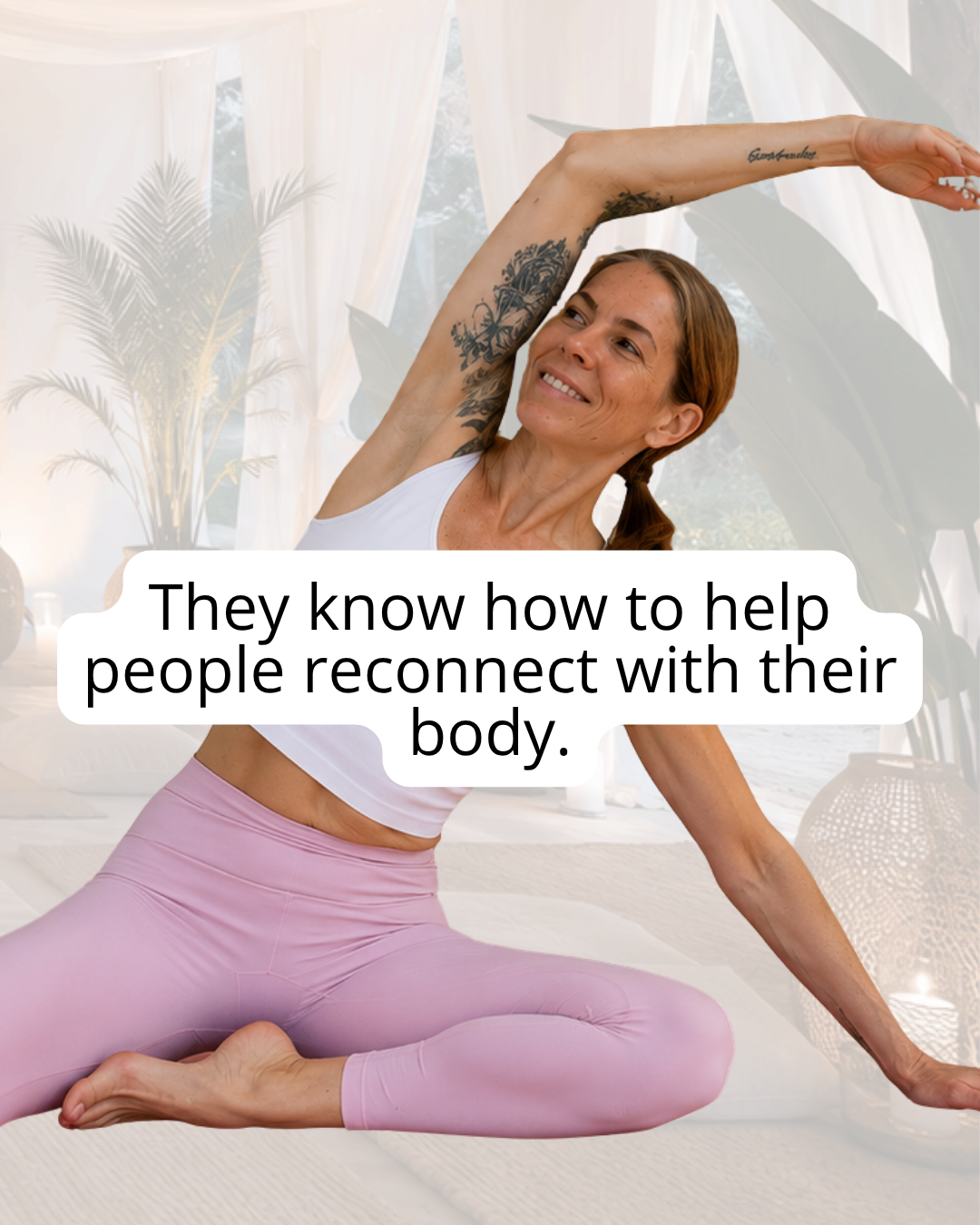
Instead, Somalates® combines Pilates-based movement, somatic awareness, breath, rhythm, mobility and sensory exploration.
Why?
Because movement isn't just something your muscles do.
Movement is information.
Every time you move, your brain receives information about:
where your body is
how it is moving
what it feels like
how much effort you're using
whether something feels comfortable or challenging
what is changing from one moment to the next
Somalates® uses that information intentionally.
This changes the role of the facilitator
A Somalates® facilitator isn't simply teaching people what exercise to perform.
They are helping participants notice their own responses.
Instead of:
“Go further.”
We might say:
“Explore what happens if you make that movement slightly smaller.”
Instead of:
“Hold your core tight.”
We might say:
“Notice how your centre supports you as you move.”
Instead of:
“Take a big deep breath.”
We might say:
“Notice where your breath moves.”
Instead of:
“Push through.”
We might say:
“Could you soften the effort and see what changes?”
This isn't about making exercise easier.
It's about making it more intelligent.
Regulation isn't the same as being calm
This is an important distinction.
Your sympathetic nervous system isn't bad.
You need it to exercise, focus, respond to challenge and mobilise energy.
Your parasympathetic nervous system isn't simply the “good” system either.
You need both.
The goal isn't to live permanently in a state of calm.
The goal is flexibility.
Can you activate when you need to?
Can you recover afterwards?
Can you notice when you're becoming overwhelmed?
Can you change your breathing, movement or environment?
Can your body respond appropriately to what is happening?
That's what healthy regulation is really about.
Nourish the system. Then move it.
This is why Somalates® sits beautifully alongside good nutrition, sleep, daylight and strength training.
Your nervous system needs energy.
Your cells need nutrients.
Your neurotransmitters need raw materials.
Your muscles need protein.
Your brain needs sleep.
Your circadian system needs light and darkness at the right times.
And your body needs movement.
There isn't one magic nutrient.
There isn't one magic hormone.
There isn't one magic nerve.
It's the whole system.
And perhaps this is the most important message for women in midlife
We have spent years being told to override our bodies.
Push harder.
Do more.
Burn more.
Ignore tiredness.
Work through it.
Start again Monday.
But midlife can be an invitation to do something different.
Listen.
Notice.
Adapt.
Move.
Breathe.
Recover.
Build strength.
Fuel yourself.
Get outside.
Sleep.
And learn to understand the signals your body is sending you.
Your body isn't broken.
Your hormones are changing.
Your brain is adapting.
Your nervous system is constantly responding.
Your thermostat is recalibrating.
Your body clock is still ticking.
And your body is continually trying to find its balance.
Somalates® doesn't promise to fix that.
It offers something much more useful:
A way to reconnect with the conversation.
To move with awareness.
To breathe with intention.
To notice rather than override.
To build strength without punishment.
To explore movement rather than force it.
And to remember that your body isn't something you need to battle.
It's something you can learn to listen to.
Somalates® — Helping your body find its balance.

Share this post:
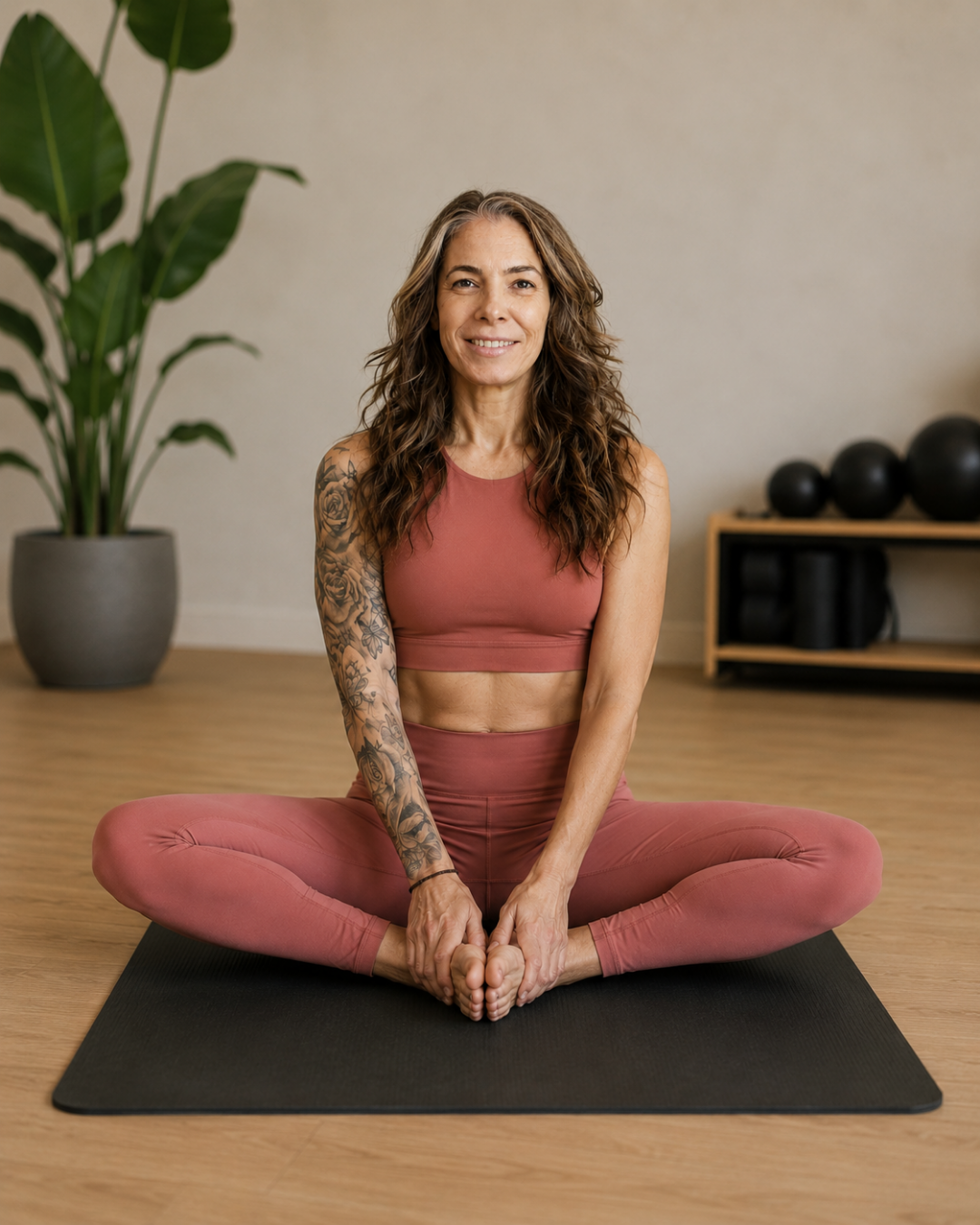
About Somalates® and Tracy Richardson MSc
Somalates® is a mindful movement approach that blends Pilates, somatic movement, breathwork and nervous system awareness to help people reconnect with their bodies and find greater balance, strength and wellbeing.
Tracy Richardson MSc is the creator of Somalates® and founder of Serendipity Wellness®. With over 25 years' experience in health, therapy and movement, she combines evidence-based practice with a compassionate, person-centred approach. Tracy is passionate about helping people move with awareness and inspiring instructors to understand the person behind the movement.
When she's not teaching or writing, you'll usually find her walking her dog, practising Pilates or enjoying a calming cup of tea.