
The invisible barriers to exercise: why feeling safe matters
Somalates®, movement and creating a different experience of exercise.
When we talk about why people do not exercise, we often talk about time.
Money.
Motivation.
Not knowing where to start.
But sometimes the barrier is something you cannot see.
Sometimes, the hardest part of exercise is not the movement itself. It is walking into the room.
And that is something I think about a lot in my work with Somalates®.
What if the barrier is invisible?
Imagine someone who would genuinely love to feel stronger, more comfortable in their body, or simply enjoy moving again.
They have the intention.
They might even have the time.
But something keeps stopping them.
Perhaps they have had difficult experiences with exercise in the past.
Perhaps they have spent years feeling disconnected from their body.
Perhaps they do not feel comfortable being watched, corrected or expected to perform.
Or perhaps they simply do not feel ready for the kind of environment they have experienced before.
From the outside, it might look like a lack of motivation.
But inside, it might feel like something very different.
It might feel like uncertainty.
Overwhelm.
Tension.
Or the need to protect themselves.
And that is why I think we need to be a little more curious about the barriers to exercise that are not immediately visible.
Exercise should not feel like something you have to endure
I think many of us have grown up with the idea that exercise is supposed to be hard.
That you should push through.
That you should keep going.
That you should be able to do what everyone else is doing.
And while there is absolutely a place for challenge, I do not believe that feeling uncomfortable all the time is the same as making progress.
For some people, being told to push harder can make movement feel like another thing they have to get right.
Another thing they might fail at.
Another situation where they feel they are not enough.
And if that has been your experience, it is understandable that exercise might not feel particularly inviting.
Why I created Somalates®
Somalates is my way of bringing together movement, breath, body awareness and nervous system support.
It is not about having the perfect body.
It is not about burning calories.
It is not about pushing through every uncomfortable feeling.
And it is not about becoming another thing you have to be good at.
It is about exploring what it feels like to be in your body.
To notice.
To breathe.
To move.
To pause.
To discover that you can make choices.
Sometimes that might mean a gentle movement.
Sometimes it might mean doing less.
Sometimes it might mean noticing that your shoulders have dropped or that your breathing feels a little easier.
And sometimes it might mean simply being in a room where you do not feel you have to perform.
The importance of choice
One of the things I value most about Somalates is the idea that you remain in charge of your body.
That might sound obvious, but it can be a really important experience for someone who has spent a long time feeling disconnected from their body or that their body is something they have to control.
In Somalates, I want people to feel that they have choices.
You can adapt a movement.
You can take a break.
You can keep your eyes open.
You can keep your eyes closed.
You can move in a way that feels comfortable for you.
You can decide that today is a day for something gentle.
There is no prize for doing the most.
And there is no failure in doing less.
A different kind of progress
In traditional fitness, progress is often measured by what you can lift, how far you can run or how many repetitions you can do.
Those things can be wonderful goals.
But they are not the only signs that something is changing.
For someone who has found exercise difficult, progress might look like:
Feeling comfortable enough to come to a class.
Noticing when they need a break and taking it.
Moving without feeling they have to compare themselves to others.
Feeling more connected to their body.
Being able to notice tension without immediately feeling they have to fight it.
Discovering that movement can feel enjoyable rather than something to endure.
These things might not show up on a fitness tracker.
But they matter.
You do not have to look like you are struggling to deserve support
I think this is one of the most important things to remember.
You do not have to arrive at a class looking anxious or overwhelmed for your experience to be valid.
You do not have to explain your history.
You do not have to tell your instructor everything you have been through.
And you do not have to justify why something feels uncomfortable.
A person can be strong, capable, successful and still find certain environments difficult.
A person can love exercise and still need a different approach at different times.
A person can look completely at ease and still be working hard internally.
We cannot always see what someone is carrying.
So I think it is worth creating spaces where people do not have to prove that they are struggling before they are met with care.
What I hope Somalates® offers
I hope Somalates offers a different experience of movement.
One where you can come as you are.
Where you do not have to be flexible, fit, coordinated or confident.
Where you can explore movement without feeling that you have to get it right.
Where you can learn to notice what your body is telling you.
Where you can take your time.
And where you can begin to build a relationship with movement that feels supportive rather than demanding.
Because exercise should not only be about what your body can do.
It should also be about how you feel while you are doing it.
And for some people, that is where the real change begins.
If you have ever felt that exercise was not really for you, I hope you know that there are different ways to move. You do not have to force yourself into an environment that does not feel right.
Somalates is about exploring movement in a way that feels more connected, more supportive and more respectful of your individual experience.
And if you are someone who has found exercise difficult in the past, I would love you to know that you are not alone.
You do not have to push through to prove that you belong.
Share this post:
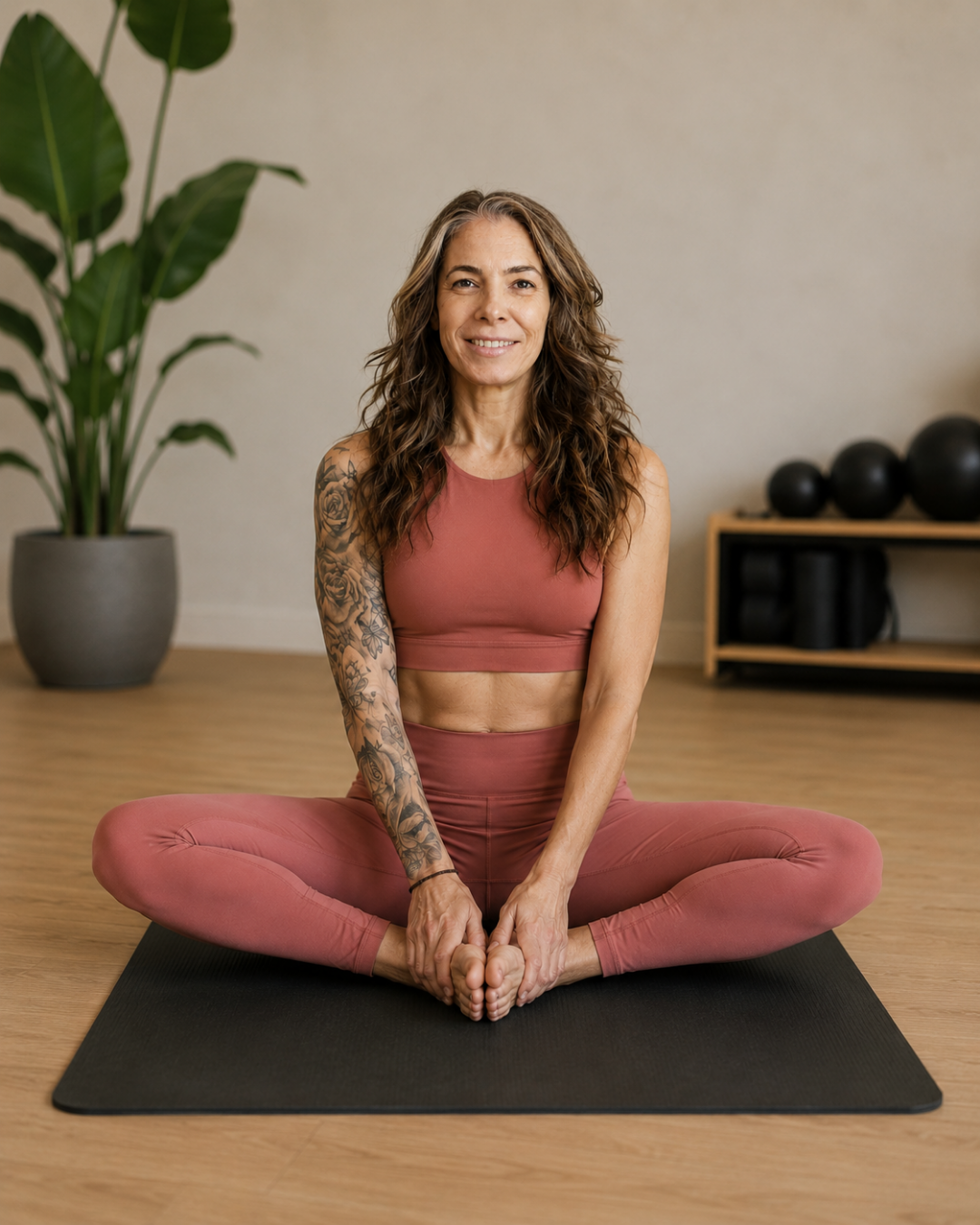
About Somalates® and Tracy Richardson MSc
Somalates® is a mindful movement approach that blends Pilates, somatic movement, breathwork and nervous system awareness to help people reconnect with their bodies and find greater balance, strength and wellbeing.
Tracy Richardson MSc is the creator of Somalates® and founder of Serendipity Wellness®. With over 25 years' experience in health, therapy and movement, she combines evidence-based practice with a compassionate, person-centred approach. Tracy is passionate about helping people move with awareness and inspiring instructors to understand the person behind the movement.
When she's not teaching or writing, you'll usually find her walking her dog, practising Pilates or enjoying a calming cup of tea.