
Reconnect. Regulate. Restore. Helping your body find its balance.
There’s a lot of conversation around menopause these days, and rightly so. We’re talking more openly about hot flushes, disrupted sleep, changing hormones, muscle loss and the emotional ups and downs that can sometimes leave us wondering who we are and what on earth is happening to our bodies.
But there’s another part of the menopause conversation that deserves our attention: our bones, our movement confidence and how we care for ourselves for the long term.
As women move through perimenopause and menopause, declining oestrogen levels can contribute to a reduction in bone density. This can increase the risk of osteopenia, osteoporosis and fractures. And because bone loss can happen without obvious symptoms, it’s easy to overlook until a problem arises.
So, how do we begin to look after ourselves differently?
At Somalates®, I believe the answer starts with reconnecting with our bodies — not by pushing harder, chasing perfection or treating every workout as another thing to tick off our to-do list, but by developing a more thoughtful, compassionate relationship with movement.
Because looking after ourselves in midlife is about so much more than what we look like. It’s about how we feel, how we move and how we want to experience the years ahead.
Why bone health deserves a place in the menopause conversation
Our bones are living tissue. They continually renew and remodel themselves in response to the demands placed upon them.
Throughout our lives, movement, nutrition, hormones, genetics and other health factors influence our bone health. During the menopause transition, changes in oestrogen can accelerate bone loss, making this an important time to consider how we support our musculoskeletal health.
And here’s something worth remembering: you cannot necessarily feel your bones becoming weaker.
You might feel perfectly well, continue with your usual activities and have no idea that your bone density is changing.
This is why awareness matters. Understanding your individual risk factors, discussing bone health with an appropriate healthcare professional and choosing suitable forms of exercise can all play a role in looking after your future self.
But I want to bring another element into this conversation.
How confident do you feel in your body right now?
Do you trust your balance? Do you feel steady when you walk downstairs? Are you comfortable getting up from the floor? Do you feel strong enough to carry your shopping, lift your grandchildren or enjoy a long walk?
These everyday experiences matter, too.
Bone health is not just about what happens inside the body. It is also about supporting the strength, coordination, awareness and confidence that help us live our lives.
The Somalates® approach: movement without the pressure
Somalates® brings together mindful movement, Pilates principles, somatic movement and breathwork to encourage reconnection, regulation and restoration.
It invites us to become curious about our bodies rather than constantly trying to correct, control or challenge them.
And I think this is particularly important during midlife.
Our bodies may feel different from the ones we knew in our twenties or thirties. Our recovery might change. Our energy can fluctuate. Movements that once felt effortless may require more attention, while other movements may feel surprisingly good.
Instead of seeing these changes as something to fight against, what if we learnt to listen to them?
In Somalates®, the intention is not to ignore our physical needs or avoid challenge altogether. It is to develop the awareness to recognise what is appropriate, make informed choices and build capacity progressively.
That means understanding that rest has a place alongside strength, that breath can help us become more aware of tension, and that adapting a movement is not a sign of failure.
It is a form of self-awareness.
And when we feel safer, more connected and more confident in our bodies, we may also feel better equipped to engage with the wider activities that support our health.
Reconnect: rediscover what your body can do
When we talk about exercise in midlife, the conversation can quickly become focused on what we should be doing.
Lift heavier. Move more. Build muscle. Protect your bones.
These are worthwhile goals, but they can feel overwhelming if you are already tired, anxious about movement or unsure where to begin.
Reconnection offers a different starting point.
Rather than immediately asking, “How much can I do?”, try asking, “What can I notice?”
Notice how your feet meet the floor. Feel the shift of your weight as you stand. Explore a comfortable range of movement through your hips and shoulders. Pay attention to how your balance changes when you move slowly and deliberately.
These small moments of awareness can help you understand your starting point and identify where you might benefit from additional support.
They can also make movement feel less intimidating.
From this foundation, you can begin to explore appropriate strength and weight-bearing activities, gradually building towards the demands of everyday life.
Reconnect with your body before asking more of it.
Regulate: finding the balance between effort and ease
Midlife can bring plenty of demands. Work, family, caring responsibilities, changing sleep patterns and fluctuating energy can all influence how we feel when we arrive at a class.
Some days, we might feel ready for a challenge. On others, even getting ourselves through the door deserves a little celebration.
Somalates® encourages us to notice our state and respond with curiosity rather than judgement.
Breath awareness, mindful transitions, gentle movement and opportunities to pause can help us become more attentive to how we are feeling. They are not a substitute for medical care or a guaranteed way to regulate every physiological response, but they can form part of a supportive movement practice.
And importantly, regulation doesn't mean avoiding effort.
Building strength requires an appropriate challenge. Weight-bearing and progressive resistance exercise are important components of a bone-health programme. The intention is to approach that challenge with awareness, suitable technique and progression that reflects the individual.
We can learn to recognise the difference between a movement that challenges us appropriately and one that feels unsuitable for our current needs.
We can also learn that taking a pause, changing a position or choosing a different variation is perfectly acceptable.
We don't need to push through every sensation to make progress.
Restore: building a relationship with movement that lasts
Restoration isn't about returning to a younger version of ourselves.
It is about creating the conditions in which we can continue to move, participate and enjoy life as we are now.
For bone health, this means looking beyond any single class or exercise method.
A well-rounded approach may include:
Weight-bearing movement: activities such as walking, stair climbing and appropriately selected standing exercises.
Progressive resistance training: exercises that challenge muscles and support bone health, with loading suited to your needs and abilities.
Balance and coordination: practice that develops steadiness and helps reduce falls risk.
Postural strength: exercises that support back strength, alignment and everyday movement.
Mobility and body awareness: exploring comfortable movement without forcing range or ignoring pain.
Recovery and consistency: allowing your body to adapt while building habits you can maintain.
Somalates® can complement this wider approach by helping you develop greater awareness, movement confidence and a more compassionate relationship with your body.
It is important to be clear, though: mindful movement alone should not be considered a treatment for osteoporosis or a replacement for appropriately prescribed resistance and weight-bearing exercise.
The aim is to help you build a sustainable relationship with movement that supports your wider wellbeing.
Because the most effective routine is not necessarily the one that leaves you exhausted. It is one that meets your needs, progresses appropriately and becomes a meaningful part of your life.
What if you have osteoporosis? Can you still move?
A diagnosis of osteoporosis does not automatically mean you need to stop exercising.
In fact, appropriately selected physical activity can be an important part of managing bone health, maintaining strength and supporting balance.
However, the type, intensity and range of movement that are appropriate will depend on your individual circumstances, including your bone health, fracture history, pain, balance and existing medical advice.
Some people may need to adapt repeated or heavily loaded spinal flexion, forceful twisting, deep rounded-back positions or movements that place excessive strain on a vulnerable spine. This is particularly important for people with vertebral fractures or a high risk of fracture.
That doesn't mean being afraid of movement. It means understanding how to move in a way that is appropriate for you.
If you have osteoporosis, a previous fragility fracture or persistent unexplained back pain, speak with your healthcare professional or an appropriately qualified physiotherapist about suitable exercise. Your instructor should also know about any relevant diagnosis and restrictions so that movements can be adapted appropriately.
In Somalates®, choice and adaptation are central to the experience. There is no requirement to perform every movement, reach a particular position or keep up with anyone else.
Your body is not a competition.
Beyond the physical: confidence, connection and self-acceptance
There is another part of this conversation that I don't want us to overlook.
How we feel about our bodies can influence how we move them.
Perhaps you have stopped attending exercise classes because you feel less fit than you used to. Maybe you worry about losing your balance, feel self-conscious about changes to your body or find traditional fitness environments a little intimidating.
Or perhaps you have spent years putting everyone else first and are only now beginning to ask what you need.
If any of this resonates, you are not alone.
Movement can be an opportunity to reconnect with yourself, but it can also provide a sense of community and belonging. Being in a supportive environment, moving alongside other people and discovering that you can adapt an exercise to suit your needs can make a real difference to your experience.
You don't need to arrive feeling confident. You can begin by being curious.
You don't need to be flexible, strong or experienced. You can start where you are.
And you don't need to earn the right to take care of yourself.
This is where the Somalates® pillars of self-awareness, self-acceptance and self-care become especially meaningful.
We learn to notice without judgement, accept that our needs may change and make choices that support our wellbeing.
That is not weakness. It is a different kind of strength.
Three questions to take into your next movement session
The next time you move your body, whether that is in a Somalates® session, a Pilates class or during a walk, pause and ask yourself:
1. What am I noticing?
Pay attention to your breathing, balance, comfort and energy. You don't need to change anything immediately. Start by observing.
2. What does my body need today?
Consider whether you feel ready for a little more challenge, need a modification or would benefit from a slower start. Let your choices reflect your circumstances rather than an expectation to perform.
3. What is one small thing I can do to support my future self?
Perhaps it is practising a balance exercise, attending a strength session, taking a walk, asking your GP about bone-health assessment or making time for a movement practice you enjoy.
Small steps matter when they become part of a bigger picture.
Looking after your future self starts now
Menopause can be a valuable opportunity to take stock of our health, reconsider our habits and become more intentional about the way we care for ourselves.
Bone health deserves attention, but so do our strength, balance, confidence, relationships and sense of connection with our bodies.
We don't need another message telling us that we are falling behind or that we must work harder to keep up with the demands of midlife.
We need information, supportive environments, appropriate movement and the freedom to find an approach that works for us.
That is the intention behind Somalates®.
Reconnect with your body. Regulate through awareness. Restore your relationship with movement.
Not to become the woman you used to be, but to support the woman you are becoming.
Because helping your body find its balance isn't about getting everything right.
It's about learning to listen, making informed choices and discovering what helps you feel more connected, confident and capable — today and for the years ahead.
With love,
Tracy Richardson MSc
Founder of Serendipity Wellness® and creator of Somalates®
Somalates® — Reconnect. Regulate. Restore.
A note on bone health
This article is for general educational purposes and is not a substitute for individual medical advice. If you are concerned about osteoporosis, fracture risk or changes in your bone health, speak with your GP or an appropriately qualified healthcare professional. Exercise should be adapted to your individual circumstances and clinical guidance.
Further reading
For evidence-based information about osteoporosis, exercise and bone health, visit the Royal Osteoporosis Society at theros.org.uk.

Share this post:
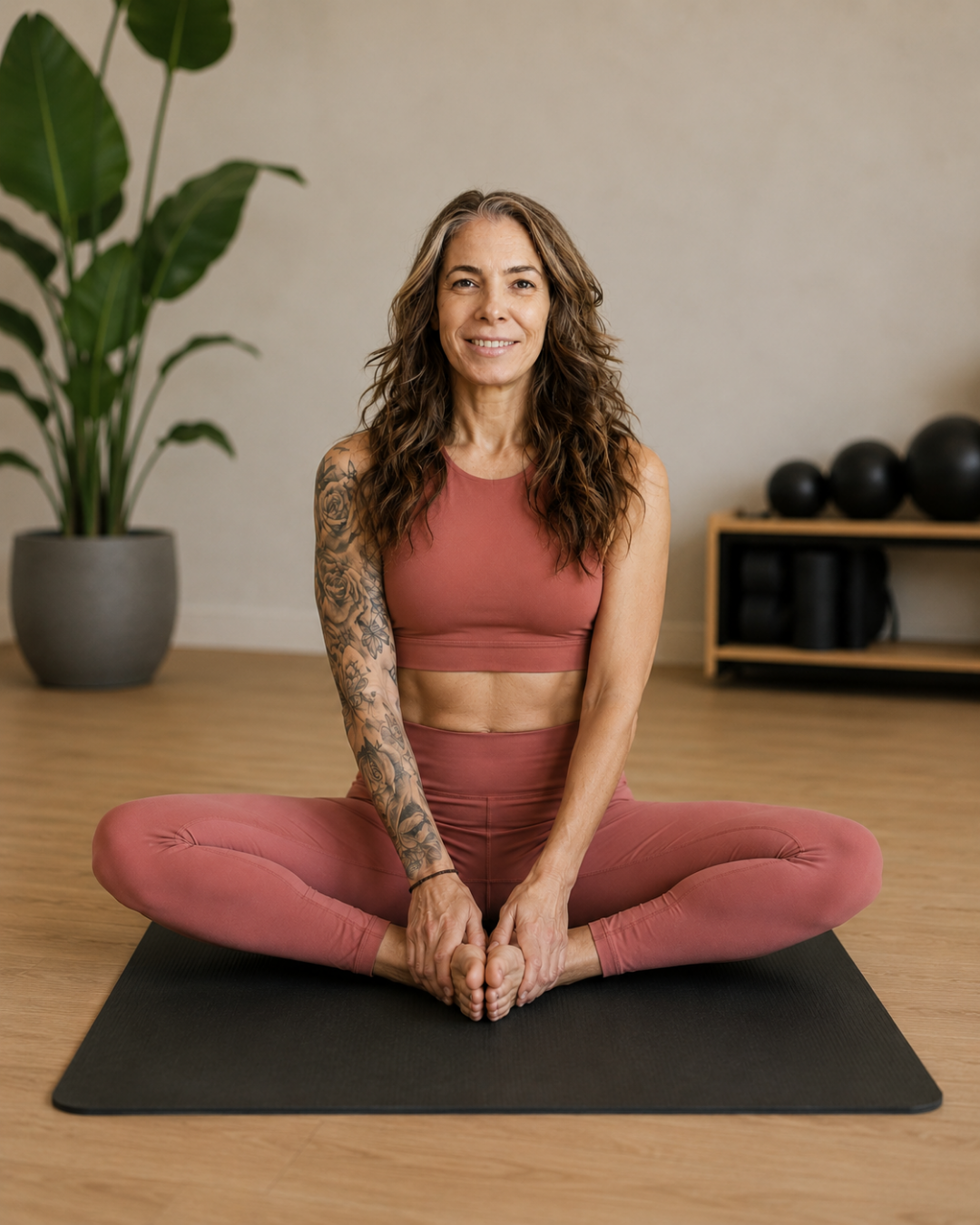
About Somalates® and Tracy Richardson MSc
Somalates® is a mindful movement approach that blends Pilates, somatic movement, breathwork and nervous system awareness to help people reconnect with their bodies and find greater balance, strength and wellbeing.
Tracy Richardson MSc is the creator of Somalates® and founder of Serendipity Wellness®. With over 25 years' experience in health, therapy and movement, she combines evidence-based practice with a compassionate, person-centred approach. Tracy is passionate about helping people move with awareness and inspiring instructors to understand the person behind the movement.
When she's not teaching or writing, you'll usually find her walking her dog, practising Pilates or enjoying a calming cup of tea.