
How we use our voice, language and presence to help the body find its balance
There is a big difference between teaching a movement and helping someone experience movement.
And I think that difference is at the heart of Somalates®.
As facilitators, we can know the sequence.
We can know the anatomy.
We can know the physiology.
We can know exactly what movement comes next.
But Somalates® isn't about getting someone to perform a movement perfectly.
It is about creating an environment where they can notice, explore, feel and respond.
And that means the way we communicate matters.
Our words matter.
Our tone matters.
Our pace matters.
And sometimes, perhaps most importantly, our silence matters.
Somalates® isn't about telling the body what to do
We spend a lot of time in fitness telling people what to do.
Lift your leg.
Engage your core.
Pull your shoulders back.
Hold this position.
Go deeper.
Work harder.
But Somalates® asks us to approach movement differently.
Instead of constantly telling the body what it should be doing, we invite the person to become curious about what their body is already doing.
“What do you notice?”
“How does that feel?”
“Can you explore that movement?”
“What happens if you make it smaller?”
“Can you find a version that feels good today?”
That small shift in language can completely change the experience.
We move from instruction to invitation.
From correction to curiosity.
From performance to awareness.
And that is where the magic of Somalates® begins.
Your voice is part of the movement
As a Somalates® facilitator, you are not simply giving instructions.
Your voice becomes part of the environment you create.
Think about the difference between someone saying:
“Come on, bigger movement! Keep going!”
and:
“See what happens if you let the movement become a little bigger.”
Both might encourage movement.
But they create very different experiences.
Somalates® is not about making every class quiet or slow.
There can be energy.
There can be rhythm.
There can be strength.
There can be playful movement.
There can be big, expressive waves.
But underneath it all is an invitation to stay connected to the body.
Your voice helps create that connection.
Cue less. Notice more.
One of the biggest challenges for a new facilitator is resisting the temptation to talk constantly.
I get it.
When you're teaching, silence can feel uncomfortable.
You wonder:
Are they doing it?
Do they understand?
Should I say something else?
So we fill the space.
But sometimes your participants don't need another instruction.
They need a moment to feel.
Try this:
Cue → Pause → Observe
Give the instruction.
Then stop.
Watch.
Let the movement happen.
Give the participant an opportunity to notice their own experience.
You might then offer another cue.
Or you might decide that nothing else needs to be said.
That pause can be incredibly powerful.
Because Somalates® isn't about creating dependence on the facilitator.
It's about helping people develop a relationship with their own body.
The Somalates® way of cueing
When you're facilitating, think about your cues as invitations rather than corrections.
Instead of:
“Keep your shoulders down.”
Try:
“Notice what your shoulders are doing as you move.”
Instead of:
“Engage your core.”
Try:
“See if you can find some support around your centre as you move.”
Instead of:
“Don't let your pelvis move.”
Try:
“Explore how still you can keep your pelvis while allowing the rest of your body to move.”
Instead of:
“Go further.”
Try:
“What happens if you explore a little more range?”
The aim isn't to make every cue poetic.
It's to make it meaningful.
Your participant should understand what you're inviting them to explore.
Use the senses
Somalates® is deeply connected to the experience of being in our body.
So don't only cue what something looks like.
Cue what it might feel like.
Ask participants to notice:
the weight of their feet
the movement of their breath
the sensation of their spine lengthening
the movement of their ribs
the softness or tension around their shoulders
the connection between their feet and the floor
the movement of their pelvis
the rhythm of their body
the difference between one side and the other
These sensory cues encourage interoception and body awareness — our ability to notice what's happening within us.
And that is much more Somalates® than chasing a perfect shape.
Movement doesn't have to look perfect
This is something I really want every Somalates® facilitator to understand.
There isn't one perfect way for a movement to look.
The same movement might look completely different from one person to another.
And that's okay.
One person may make a huge wave.
Another may make a tiny one.
One person might move quickly.
Another might move slowly.
Someone may remain seated.
Someone else may want to stand.
Someone might close their eyes.
Someone might keep them open.
The facilitator's role isn't to make everybody look the same.
It's to create enough guidance and safety for people to find their own movement.
That's a very different approach to teaching.
Your participant is the expert in their own body
As facilitators, we bring knowledge.
We bring experience.
We bring understanding of movement.
But we don't live inside our participants' bodies.
They do.
So rather than assuming we know exactly what someone is feeling, we can ask.
“How does that feel?”
“Does that feel comfortable?”
“Would a smaller movement work better?”
“What do you notice on this side?”
“Would you like to stay here or explore more?”
This doesn't make our teaching weaker.
It makes it more collaborative.
We become guides rather than dictators.
The nervous system is listening too
There is another reason our communication matters.
People don't only hear our words.
They experience our tone, rhythm, pace and presence.
If we're rushing, shouting instructions and constantly changing exercises, the class can feel very different from one where the facilitator is grounded, clear and present.
This doesn't mean Somalates® has to be slow.
It means we are intentional.
We can bring energy when the movement needs energy.
We can bring softness when the body needs space.
We can bring playfulness.
We can bring stillness.
We can bring rhythm.
We can bring breath.
We can bring quiet.
Our facilitation becomes responsive to the room rather than simply delivering a pre-planned script.
Read the room
One of the most important skills you can develop as a Somalates® facilitator is learning to observe.
Look around.
Are people following?
Do they look confused?
Are they moving freely?
Do they look tense?
Are they smiling?
Are they holding their breath?
Does the movement look natural?
Does the group need more explanation?
Or does it need less?
And remember:
If lots of people aren't getting it, change the cue.
Don't simply say it louder.
Don't repeat exactly the same instruction five times.
Try something different.
Demonstrate.
Simplify.
Change the image.
Reduce the range.
Change the rhythm.
Or invite them to simply explore.
That's facilitation.
Somalates® is an invitation, not a performance
Perhaps this is the biggest difference.
We aren't asking participants to perform Somalates® correctly.
We're inviting them to experience themselves through movement.
That might mean finding more mobility.
It might mean releasing tension.
It might mean feeling stronger.
It might mean breathing more freely.
It might mean moving in a way they haven't moved for years.
Or it might simply mean taking 45 minutes away from everything else and coming back to themselves.
There is no single outcome.
Because every body arrives differently.
Allow space for the body to respond.
And then repeat.
Not as a rigid formula.
But as a rhythm.
Invite → Guide → Explore → Observe → Adapt → Pause.
The best cue might be no cue at all
As facilitators, we sometimes feel that we have to be doing something all the time.
But imagine giving your participants a movement and then simply saying:
“Stay here for a moment and notice.”
And then being quiet.
That silence gives them something your instructions can't:
space to listen to themselves.
And perhaps that is one of the most important things we can give someone in a Somalates® session.
Not another instruction.
Not another correction.
Not another thing to get right.
Just the opportunity to feel.
Helping the body find its balance
Somalates® is about movement.
But it's also about the relationship we have with movement.
The relationship we have with our body.
And ultimately, the relationship we have with ourselves.
As facilitators, our job isn't to have all the answers.
It's to create the conditions for exploration.
To guide without controlling.
To encourage without pushing.
To challenge without overwhelming.
To offer options without judgement.
And to help each person discover what their own body needs today.
Because great Somalates® facilitation isn't about saying more.
It's about knowing what to say, when to say it — and when to simply get out of the way and let the body move.
Somalates® — Helping your body find its balance.
And perhaps, as facilitators, we're learning to find ours too.
Share this post:
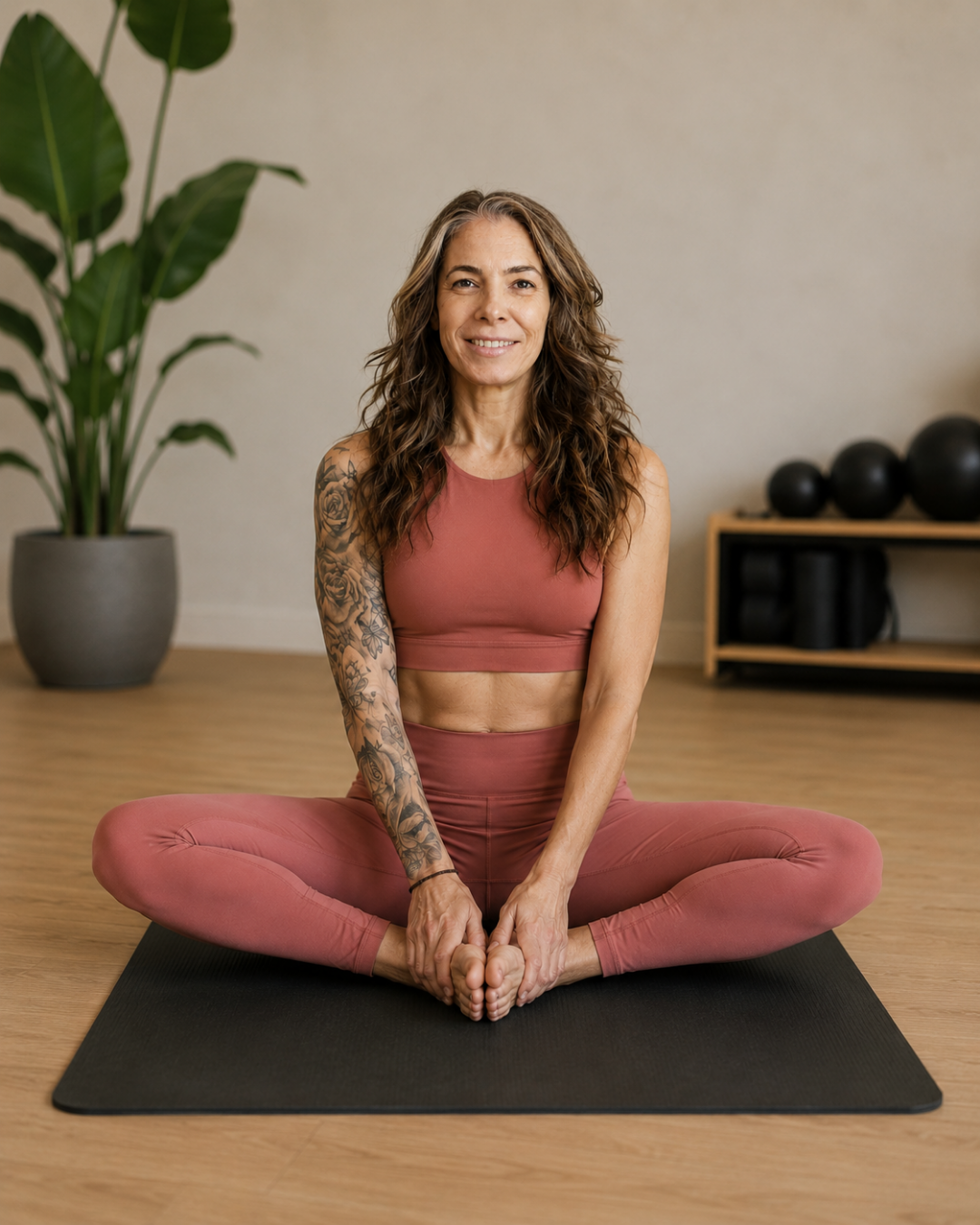
About Somalates® and Tracy Richardson MSc
Somalates® is a mindful movement approach that blends Pilates, somatic movement, breathwork and nervous system awareness to help people reconnect with their bodies and find greater balance, strength and wellbeing.
Tracy Richardson MSc is the creator of Somalates® and founder of Serendipity Wellness®. With over 25 years' experience in health, therapy and movement, she combines evidence-based practice with a compassionate, person-centred approach. Tracy is passionate about helping people move with awareness and inspiring instructors to understand the person behind the movement.
When she's not teaching or writing, you'll usually find her walking her dog, practising Pilates or enjoying a calming cup of tea.